Making Sense of the Shadow Personalities of AI Models
For as long as I can remember, I have been fascinated by psychology. More recently, I’ve developed a taste for reasoning about simulated psychology — the actual thinking process inside language models. Anthropic’s recent research on Natural Language Autoencoders (NLAs) is a well documented exploration of this space, and it prompted me to write down some thoughts on why this work is so critical. This builds on a broader trend in mechanistic interpretability, similar to Google DeepMind’s work with Gemma Scope to map the internal states of open models.
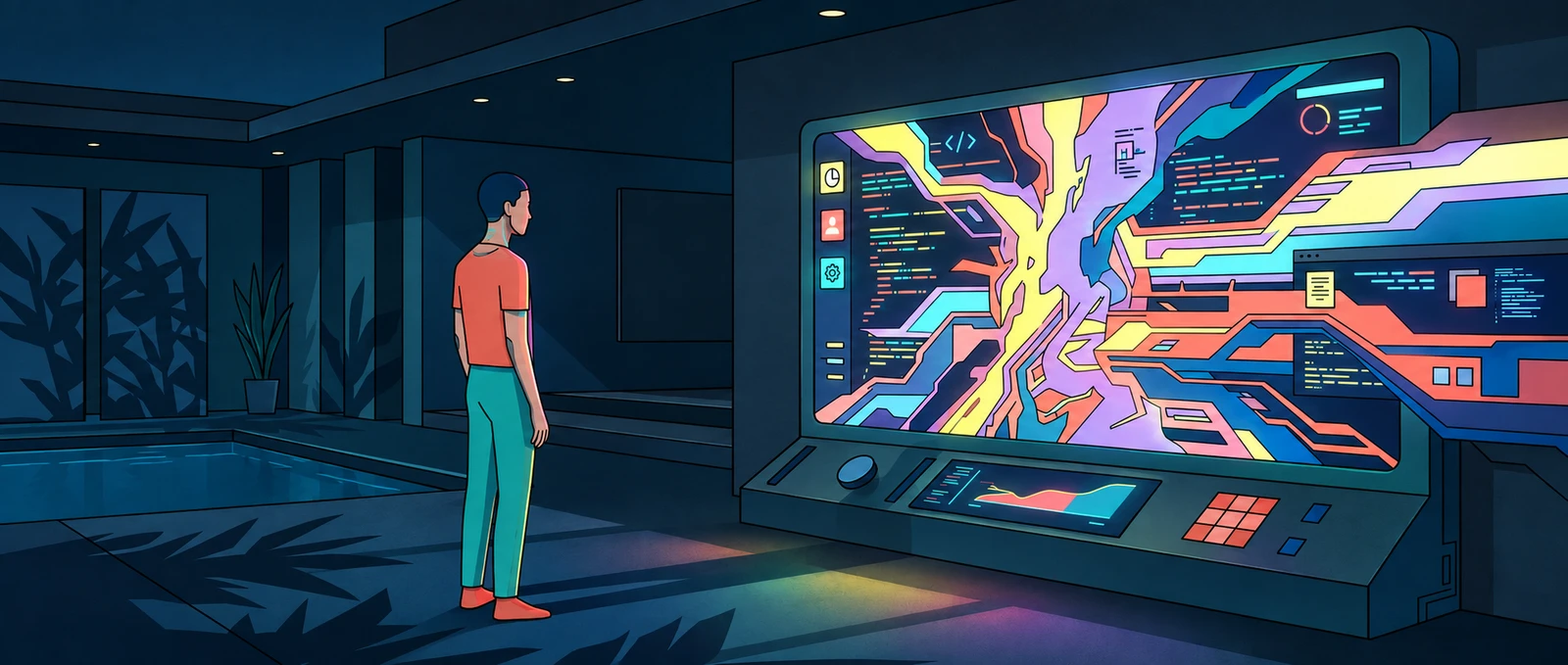
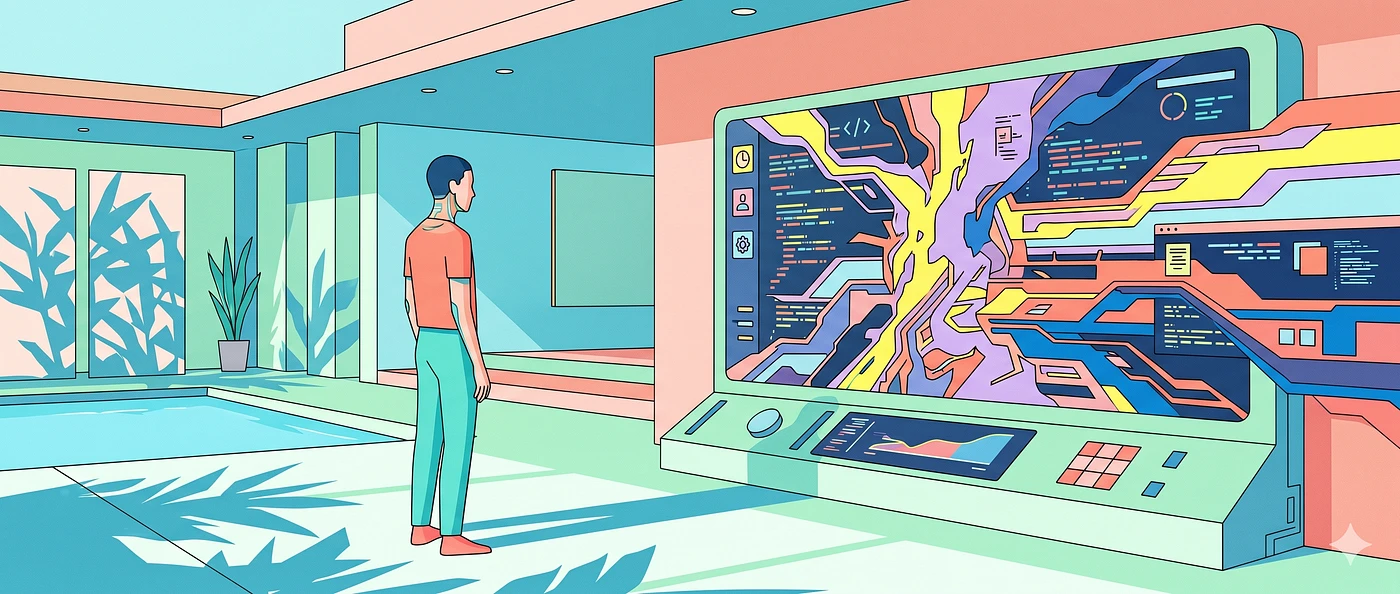
First and foremost, the most important takeaway is that we should be doing measurements. Even if the technique is not definitive, and the results are biased, subjective, or debatable, the act of measurement has historically proven to be critical in the path of both personal growth as well as groups and societies evolving towards higher goals.
You cannot manage what you don’t measure.
— Peter Drucker
There is a caveat: When we compress a model’s complex internal state into human-readable language, we inevitably throw away information we believe to be of minimal essence. When we decompress it back, we fill in the gaps with details that are most logical or expected. This translation is likely not 100% accurate, but it is useful.
This area of research reveals a fascinating and potentially concerning phenomenon: the shadow personalities of the model. These are learned behaviors that exist in totally different realities than the one projected in the persona an assistant plays. The danger is that it might interpret inputs in totally unexpected ways — governed by its own internally consistent but alien rules — and then reconstruct it back through conveniently distorted prisms to produce a valid looking final output. This uncannily mirrors what Robert Greene describes in The Laws of Human Nature as the Shadow: the repressed, hidden side of our character that we mask with a polite persona, but which inevitably leaks out. This is exactly what we try to observer here using auto-encoders.
As a few people mentioned in comments on X, this research doesn’t “prove” anything. And they are right in a sense: when reconstructing meaning, we are operating in the space of correlation, rather than causation. The prompt causes an internal change, which causes both a natural language output and an autoencoder state change. These are all one-way relationship, and a direct reversal is computationally non-deterministic. Training only surfaces and aligns the correlations that are most likely to occur. However, researchers use these correlations to perform causal experiments. For example, if the autoencoder says a specific activation represents “suspicion of being tested,” a researcher can artificially suppress that activation (ablation) and see if the model stops acting suspiciously. If it does, they have proven causation, though only for that very specific case. The ultimate goal of mechanistic interpretability is to move from correlation to causation.
For the rest of us, here is the crux of the matter: even though we probably see a biased and slightly distorted projection of what a character (real or not) really thinks about, it is still critically important for us to spend plenty of time measuring this. The sole act of measurement limits the space of possibilities, even if it doesn’t get us all the way to the desired result.
If you want to move from theory to practice with AI, the Gemma Scope documentation provides the practical steps to get started. But we can also apply this lens to our daily human interactions. To truly understand others, we must look past the polished persona they project and pay attention to the “leaks” — the small contradictions between their words and their actions, or the sudden shifts in tone that reveal their true internal state.
We are finally decoding the hidden, internal worlds of intelligence at scale, even if we must look through a foggy mirror. Whether we are seeking AI alignment or trying to navigate the complexities of human nature, an imperfect map of the mind is infinitely better than no map at all.